Reflections on the Vietnam Wars and Frank and Catherine Jao’s Role in Advancing Reconciliation
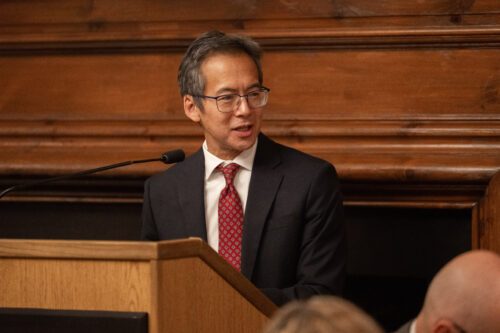
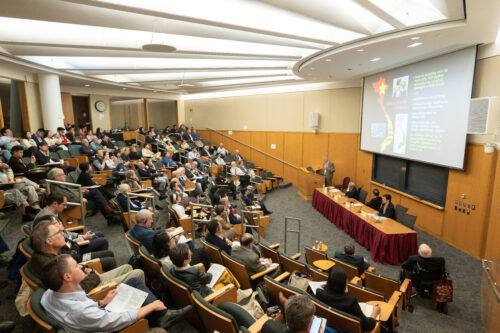
Wars end, but the story of how they are remembered, and how people heal from them, continues. On Friday, October 3, during Fifty Years On: New Perspectives on the Vietnam Wars — a two-day conference hosted by Harvard University’s Global Vietnam Wars Studies Initiative — Archon Fung, Winthrop Laflin McCormack Professor of Citizenship and Self-Government and director of the Ash Center for Democratic Governance and Innovation, shared remarks reflecting on memory, reconciliation, and the enduring lessons of conflict. Convened 50 years after the fall of Saigon, the conference brought together scholars, veterans, and practitioners to explore how the wars in Vietnam, Cambodia, and Laos continue to shape politics, remembrance, and global relationships today.
In his remarks, Fung emphasized the importance of confronting the human costs of war. He spoke of the growing distance between those who planned wars and those who fought in them, arguing that bridging this gap is essential to prevent future conflicts. Central to this vision of reconciliation and understanding, Fung noted, is the work and generosity of Frank Jao and his wife, Catherine, whose commitment as prominent Vietnamese American philanthropists has been vital to ensuring the program’s continuance. Drawing on Jao’s own journey, Fung highlighted how individual acts of courage and generosity can sustain collective healing.
The following remarks have been lightly edited for clarity.
“Let me add my deepest gratitude to Frank and Cathy Jao for their steadfast friendship to the Ash Center … and — most importantly — for Frank’s deep commitment to fostering continued peace and reconciliation from the bitter ashes of the war in Vietnam. It’s a commitment that truly embodies the spirit of this institution.
On a personal note, I’m deeply grateful to Frank for showing me the heart of his community. I’ve been fortunate enough to spend time in Little Saigon, Orange County — now home to some 200,000 Vietnamese Americans and the largest population center outside of Vietnam. And in many ways, it is the community that Frank built.
I remember my first visit a couple of years ago vividly. He shared the origin story — deeply entwined with his own journey coming to the United States. He was among the first Vietnamese people in Southern California, and he had to hustle. Get loans, secure land, open businesses. That’s hard enough in a new and strange land, but he faced the additional weight of racism and xenophobia. And it wasn’t just prejudice; there were forms of violent intimidation. I’m sure most people would not have been as courageous — or maybe stubborn — as Frank. I get the sense that after surviving the Vietnam War, there was no way he was going to be deterred.
And as a result of that courage and determination, Little Saigon today is a place rich with community — a center of economic opportunity. I remember walking through one of the malls Frank built, and being struck by what was on the top floor. It’s a jewelry center and diamond exchange, but it wasn’t filled with big international companies. No, there were dozens of stalls where individuals could set up shop — almost like a bazaar. People come from all over the region to buy jewelry there. And some of those women running these small businesses proved remarkably good at it, expanding to bigger shops on the first floor and eventually opening their own stores outside. It’s the kind of economic ladder that I wish more of our communities had.
Now, among Frank’s many interests is the one that brought him to [Harvard Kennedy School]. He’s deeply committed to remembering and understanding the horror of past wars, in the hope that we can avoid war in the future. And he begins with the lives of the three million Southeast Asians and 50,000 Americans who died in the wars in Vietnam, Cambodia, and Laos.
For many years, he’s supported Hai [Nguyen, co-founder and director of the Global Vietnam Wars Studies Initiative and the Unseen Legacies of the Vietnam War Project] and Tony [Saich, director of the Rajawali Foundation Institute for Asia and Daewoo Professor of International Affairs]’s incredible project to gather hundreds of stories: oral histories and video testimonies from people who experienced those wars from just about every dimension. North, South, United States, Vietnamese, commanders, foot soldiers, and civilians. It’s a truly comprehensive effort.
And we live in a dangerous moment, with some of the bloodiest wars in decades being fought out in Ukraine, Gaza, and other places. This effort to understand conflict … not just in Vietnam but many other conflicts, is vital. War is a timeless problem, probably older than humanity itself. But this is an especially important moment to understand it — and how to have less war.
For me, the particular approach of the Legacies of the Global Vietnam War project is especially important here at the Kennedy School. We train many war planners and international security strategists. International relations is one of the crown jewels of this institution, and it has been for decades.
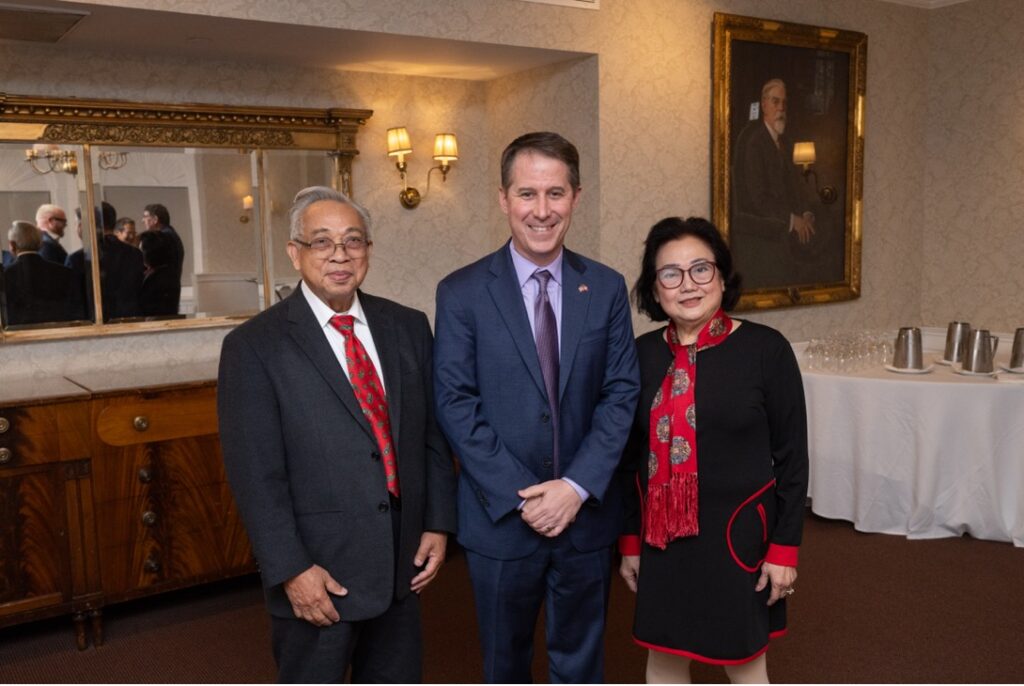
Mr. Frank Jao, Harvard Kennedy School Dean Jeremy Weinstein and Mrs. Catherine Jao
But what’s often missing from that paradigm are the voices and experiences of ordinary people — the soldiers, the civilians. I think this distance between those who plan wars and decide to start them — and the young people who go to war and suffer in them — is growing. It’s much greater now than it was even during the Vietnam era.
Fred [Logevall, Laurence D. Belfer Professor of International Affairs and professor of history at Harvard University], in your wonderful talk this afternoon, you mentioned Robert McNamara and his role in the war. His “whiz kid” analytic, systems-oriented, quantitative approach to public policy and government — of the war and government — informs how we train and think about policy, including policy about war. Fred, your research reveals that McNamara — and Kennedy and Johnson along with him — never really thought that the war would go well but kept at it to maintain credibility — personal credibility and political credibility.
I think one valuable contribution of the work from the Global Conflict and Reconciliation Program will be to close this tragic knowledge gap by making the actual experience and suffering of war closer to those who plan for wars. I hope that closing that gap will make the future Robert McNamara’s America and around the world worry as much about their responsibility to those people as about their political or professional credibility. I hope that this knowledge and change will reduce war around the world.”
Fifty Years On: New Perspectives on the Vietnam Wars – Day Two
The second day of Fifty Years On: New Perspectives on the Vietnam Wars continued the conversations from Day One, exploring the wars’ lasting global and human impact. Building on the first day’s scholarship and personal reflections, Day Two featured three panels and a final roundtable. A first article covers Day One.
Fifty Years On: New Perspectives on the Vietnam Wars – Day One
The first day of the Fifty Years On: New Perspectives on the Vietnam Wars conference presented new scholarship and firsthand reflections that expanded how the Vietnam Wars are remembered and studied. Scholars, veterans, and practitioners examined the conflict from multiple perspectives, centering Vietnamese and other international voices often missing from traditional narratives. A second article covers Day Two.
Vietnamese Diaspora: The Ongoing Journey of Conflict and Reconciliation
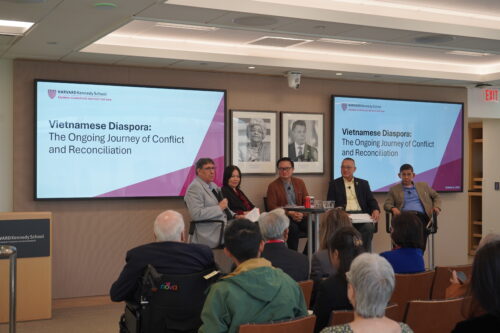
Fifty years after the fall of Saigon, the panel “Vietnamese Diaspora: The Ongoing Journey of Conflict and Reconciliation,” highlighted personal and intergenerational experiences of loss, resilience, and renewal, offering insight into how the Vietnam Wars continue to shape Vietnamese communities today.
Fifty Years On: New Perspectives on the Vietnam Wars – Day Two
The second day of Fifty Years On: New Perspectives on the Vietnam Wars continued the conversations from Day One, exploring the wars’ lasting global and human impact. Building on the first day’s scholarship and personal reflections, Day Two featured three panels and a final roundtable. A first article covers Day One.
Fifty Years On: New Perspectives on the Vietnam Wars – Day One
The first day of the Fifty Years On: New Perspectives on the Vietnam Wars conference presented new scholarship and firsthand reflections that expanded how the Vietnam Wars are remembered and studied. Scholars, veterans, and practitioners examined the conflict from multiple perspectives, centering Vietnamese and other international voices often missing from traditional narratives. A second article covers Day Two.
Vietnamese Diaspora: The Ongoing Journey of Conflict and Reconciliation
Fifty years after the fall of Saigon, the panel “Vietnamese Diaspora: The Ongoing Journey of Conflict and Reconciliation,” highlighted personal and intergenerational experiences of loss, resilience, and renewal, offering insight into how the Vietnam Wars continue to shape Vietnamese communities today.