
Feature
SFFA vs. Kamehameha Schools: Beyond Affirmative Action and the Implications for Indigenous Communities
A summary of the Wednesday, April 8 event exploring the legal and political stakes of Students for Fair Admissions’ (SFFA) new case and what it means for Native Hawaiian self-determination.
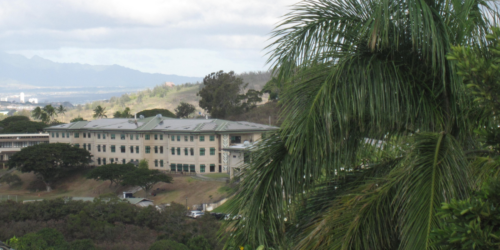
Kamehameha Schools is a K-12 school system in Hawaii, endowed by Bernice Pauahi Pākī Bishop, to educate Hawaiʻi’s next generation of leaders and changemakers and provide cultural education to Native Hawaiian students.
Students for Fair Admissions (SFFA), a Virginia-based nonprofit legal advocacy group whose stated purpose is to “support and participate in litigation that will restore the original principles of our nation’s civil rights movement,” filed a suit against Kamehameha Schools in October 2025, alleging that its admissions preference to Native Hawaiian applicants is “blood-based discrimination.” SFFA successfully sued Harvard University and the University of North Carolina, which led to the Supreme Court’s ruling that race-based affirmative action policies were unconstitutional.
On April 8, 2026, the Ash Center for Democratic Governance and Innovation and the Asian American and Pacific Islander (AAPI) Student Caucus at Harvard Kennedy School brought together community members to discuss the implications of this case for Kamehameha Schools and Native Hawaiians more broadly. The event was hosted by AAPI Research Fellows Jacqueline Chen MPP ‘26 and Katherine Waltman MPP ‘28.
Panelists included Dr. Randall Kekoa Quinones Akee, the Julie Johnson Kidd Professor of Indigenous Governance and Development and faculty director of the Project on Indigenous Governance and Development at Harvard Kennedy School, a Kamehameha Schools graduate, along with Kaeo Yuen, a Native Hawaiian student at Harvard College and a 2024 graduate of Kamehameha Schools. Velika Yasay, a second-year Master of Public Policy candidate from Kalihi, Hawaiʻi, moderated the conversation.
The speakers situated the lawsuit within the historic and ongoing U.S. occupation of Haw, which was an independent sovereign nation until 1893, when American business interests backed by U.S. Marines orchestrated the overthrow of Queen Liliʻuokalani. What followed was systematic displacement—the Hawaiian language was banned from public schools in 1896, and the law remained in place for a century before it was rescinded in 1986. The consequences that followed were not only cultural. Generations of Native Hawaiians grew up cut off from their native language and from the economic and political structures that had held up their communities.
The speakers emphasized how the broader ecosystem of Native Hawaiian-serving programs must be understood against this historical backdrop, and how programs serving Native Hawaiians in education, health, housing, and language revitalization exist to remedy the persistent impacts of colonialism and dispossession. Native Hawaiians experience disproportionately high rates of poverty, homelessness, and chronic disease relative to other groups in Hawaiʻi. Panelists argued that programs addressing these disparities are not necessarily race-based, but act as targeted remedies for targeted harm, directed at a people whose land, language, and self-governance were taken by force. The speakers concluded the panel with a broader discussion on the debate within the Native Hawaiian community about federal recognition, sovereignty, and heritage preservation.
Jacqueline Chen MPP ‘26 is an AAPI Research Fellow with the Rajawali Foundation Institute for Asia.
Katherine Waltman MPP ‘28 is an AAPI Research Fellow with the Rajawali Foundation Institute for Asia.
The views expressed in this article are those of the author(s) alone and do not necessarily represent the positions of the Ash Center or its affiliates.