
Q+A
Strategic Decision-Making by Anti-Corruption Agencies: Case Selection, Communication, and Institution-Building Q & A
A Q&A with Jeeyang Rhee Baum, Adjunct Lecturer in Public Policy at the Harvard Kennedy School and co-author of a new paper exploring strategic challenges that anticorruption agencies (ACAs) and other comparable bodies face with a focus on case selection and communication strategies, and the implications for practioners and reformers working to strengthen anticorruption institutions in Asia and beyond.

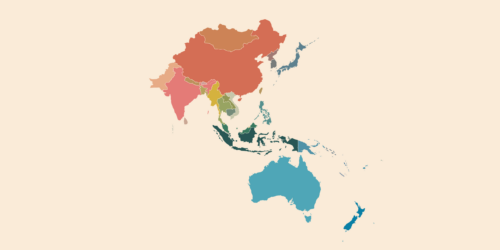
Q: Your research draws on interviews with senior anticorruption officials across multiple regions, including the Asia-Pacific. Based on your findings, what distinctive strategic challenges do anticorruption agencies in Asia face, particularly in politically sensitive environments? How do institutional context, political culture, or state capacity shape the tradeoffs that ACA leaders in Asia confront?
A: One of our most striking findings concerns the tension between formal impartiality norms and political reality. One senior official from an Asia-Pacific ACA told us that his agency “did not allow political considerations to interfere” with decisions about senior politicians. However, he then acknowledged in the same interview that “in practice, for a case involving a figure like the Prime Minister, the agency would be especially cautious, because errors could result in serious consequences for both the agency and the official responsible for bringing the case.” This gap between official posture and operational reality is probably not unique to Asia.
The South Korea Corruption Investigation Office (CIO) case illustrates a distinctive institutional design challenge. The CIO has investigative but limited prosecutorial authority. This separation creates a different set of strategic calculations. The CIO must weigh the social salience of corrupt conduct more heavily relative to conviction prospects, since conviction is ultimately someone else’s responsibility.
We also found, perhaps unsurprisingly, that when the ACA cannot rely on the judiciary’s impartiality, the evidentiary threshold question becomes even more fraught. The fact that many ACA officials we spoke to indicated that they would not proceed against a senior official unless the evidence was very clear and strong reflects not just institutional caution but a recognition that courts themselves may be subject to political pressure.
Q: One of your central arguments concerns the tradeoff between pursuing “high-impact” cases and prioritizing cases that are more likely to succeed in court. A related consideration is that going after senior political figures could strengthen institutional legitimacy but also provoke backlash. In the Asian contexts you studied, how have agency leaders navigated this tension?
A: An ACA must manage a mix of lower-risk/lower-return cases and higher-risk/higher-return cases, optimizing not for its own benefit but for its citizen-principals. This framing is valuable because it resists the false binary of “go after big fish” versus “focus on winnable cases.”
One official we spoke to, who had led a special investigative unit, recounted that he had initially pursued every case for which there was strong evidence of guilt, regardless of the significance of the misconduct, but he later realized that this stretched his limited resources too thin, and he shifted to focusing on high-impact cases involving presidents, ministers, and senior military figures. But he added that sometimes it makes sense to “start with the low-hanging fruit and then go after a huge impact case.” The logic of the latter approach is institution-building: accumulating wins, developing internal capacity, and establishing public credibility before taking on politically explosive targets. Along similar lines, Bertrand de Speville, the former ICAC Commissioner from Hong Kong, argued strongly against targeting big fish selectively, on the grounds that visible selectivity itself damages public trust in impartiality. For a newly established ACA in Asia operating in a high-scrutiny environment, this concern may be particularly weighty. Being seen to investigate all credible allegations consistently may matter more, in the early institution-building phase, than maximizing the impact of any single case.
An added complication here is that many countries, including several in the Asia-Pacific region, formally adhere to the so-called “legality principle,” which requires prosecution when the evidence of wrongdoing passes some threshold of sufficiency. In jurisdictions where mandatory prosecution norms apply, ACAs may have less formal discretion to strategically select their cases. But even under such frameworks, agencies in practice triage at earlier stages (preliminary inquiries, resource allocation decisions) so strategic case selection happens regardless.
Q: You highlight the importance of managing political risk without compromising professional integrity. How can ACA leaders exercise strategic judgment while maintaining public trust in their impartiality? What safeguards or internal norms seem most important to prevent strategic case selection from sliding into politicization?
A: This is perhaps the most difficult question, and there is not a clear answer. ACA leaders in practice do apply higher evidentiary thresholds to politically sensitive cases — and several officials defend this as not just pragmatically necessary but professionally responsible. One official described sitting “at the intersection of professional and political worlds” and argued that it would be “irresponsible” for someone in that position not to factor in the political environment. His predecessor, who didn’t adjust for political realities, “was driven out as a result.”
However, we also take seriously the counterargument that ACA legitimacy depends precisely on the perception of non-political decision-making, and that once leaders start making politically calibrated judgments, they may lack the information and discipline to do so well and may rationalize pre-existing preferences. As one prosecutor put it, “We don’t have control of the situation. We don’t have all the information. So, as a prosecutor, you just do your job.”
Perhaps a useful distinction is between line prosecutors and agency heads. Line prosecutors probably should not be making political calculations. But the agency head probably cannot avoid them entirely. If political calibration happens only at the leadership level, with transparent internal deliberation and documentation, it is more defensible than if it permeates the investigative and prosecutorial ranks.
For jurisdictions that have a mandatory prosecution rule (the legality principle mentioned earlier), perhaps a practical safeguard is to front-load rigor at the preliminary inquiry stage, applying genuinely high evidentiary standards consistently before a formal investigation is opened, rather than making politically influenced decisions to drop cases after they are publicly announced. The latter is both harder to defend and more damaging to institutional credibility.
Q: Communications strategy is another major theme in your article. In Asia, where media ecosystems and civil society space vary widely, how should anticorruption agencies think about public engagement? When does a more assertive media presence help protect institutional autonomy, and when might it risk making the agency appear partisan or overly political?
A: The core tension we identify is real and practically important: more open communication helps counter the efforts of well-resourced individuals and their lawyers to shape the narrative, but risks making the agency look partisan or political.
A Latin American prosecutor explained that in his environment, silence was not an option: “If I don’t go to the press and don’t discuss all the evidence…, we will be destroyed, because the lawyers of those clients have a lot of connections and they do a lot of communication with the press.” By contrast, Thuli Madonsela of South Africa’s Public Protector described a deliberately clinical, fact-and-law-only media posture, avoiding being drawn into public battles with critics.
For Asian contexts, there is wide variation in media and civil society ecosystems. Some, like South Korea or Taiwan, are relatively open, but others are highly constrained. But our logic suggests the following principles apply regardless of that variation.
First, the tenor of communication matters as much as its frequency. An ACA that communicates regularly but in a scrupulously factual, evidence-handed tone is in a better position than one that communicates in ways that seem to take sides in political conflicts.
Second, it may sometimes be useful to avoid making any single person the public face of the unit. This is a practically useful safeguard against the agency being personalized and thus more easily discredited through attacks on individuals. One official we spoke to addressed this by deliberately rotating which task force members gave press conferences.
Third, our paper notes the question of whether ACA leaders should weigh in on broader anticorruption policy debates beyond their formal authority. The advantage of doing so is that it can help raise the agency’s profile and build its reputation in less controversial terrain. The risk, though, is creating the appearance that the agency is straying from a proper institutional role. In Asian contexts where civil society space is constrained, this question may be especially acute: An ACA that speaks too broadly may find itself in direct conflict with government actors who have more tools to push back.
Q: For practitioners and reformers working to strengthen anticorruption institutions in Asia, what are the most important takeaways from your research? If you were advising a newly established anticorruption agency in the region, what early strategic choices around case selection and public communication would you emphasize to balance short-term impact with long-term institutional resilience?
A: On case selection, the most consistent message across interviews is that evidentiary strength is the predominant factor, and that this is not just a matter of legal professionalism but of institutional survival. Most officials, across regions, would not proceed without roughly a 70-80% conviction probability — and this threshold would be higher for very senior politicians. For a new agency, this implies building forensic, financial investigation, and legal research capacity before taking on the hardest cases, rather than going after high-profile individuals prematurely.
On sequencing, we suggest that a new agency should be thoughtful about the portfolio composition question from the start — not defaulting to either “only low-hanging fruit” or “only big fish,” but thinking explicitly about how early wins build the institutional credibility and internal capacity needed for harder cases later.
On communications, our advice is essentially that no approach is risk-free, but that consistency, restraint in tone, and institutional rather than individual visibility is generally safer than the alternatives. The key is that the communications strategy be deliberate, not reactive.
Perhaps the main takeaway is that these strategic decisions deserve explicit, conscious deliberation. We found that many officials were navigating these tradeoffs thoughtfully but often without formal frameworks or peer benchmarking. Building structured internal deliberation processes and engaging more openly with peer agencies through existing regional and international networks may be as valuable as any particular strategic choice on case selection or communications.
Jeeyang Rhee Baum is Adjunct Lecturer in Public Policy at the Harvard Kennedy School, where she is a Faculty Affiliate with the Ash Center for Democratic Governance and Innovation. Her research and teaching focuses on comparative political institutions, governance, and democratization with particular emphasis on East Asia.
The views expressed in this Q & A are those of the author(s) alone and do not necessarily represent the positions of the Ash Center or its affiliates.