

Case Study  

Multi-Alignment as Strategy: How Brazil Navigates Between Washington, Beijing, and the Global South

In a new study for the Middle Powers Project, Oliver Stuenkel explains how Brazil’s self-perception as a “giant by nature” advances its foreign policy with a strategy of multi‑alignment. As Brazil strives to balance relationships with both China and the United States and solidify its roles in BRICS and the G20, the country’s autonomy is pressured by great-power rivalry and its regional influence remains limited. The Middle Powers Project is in collaboration with the Belfer Center for Science and International Affairs. 

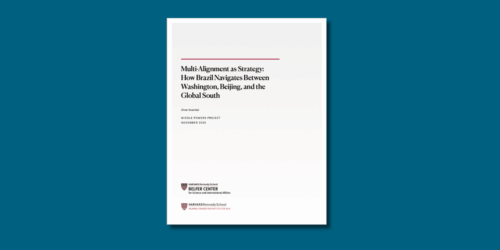
A cover photo of the report.

In this report, Oliver Stuenkel examines how despite fitting the analytic profile of a middle power, Brazil’s self-image as a major power has driven its foreign policy decisions, with the country seeking to balance ties with both China and the United States by engaging in economic and technological relationships with both major powers.

A period of increasing geopolitical fragmentation poses a strategic dilemma for Brazil, with the country economically dependent on China and reliant on security cooperation with the United States. Without increased economic or security investment in the region, Brazil’s multi-alignment strategy may inhibit its ability to shape outcomes in South America.

More on this Location

Q & A with Ning Leng, Author of “Politicizing Business: How Firms Are Made to Serve the Party-State in China”
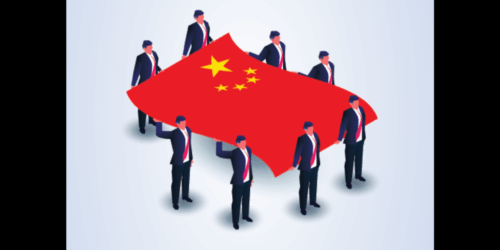
An image from Ning Leng's book cover.

Q+A

Q & A with Ning Leng, Author of “Politicizing Business: How Firms Are Made to Serve the Party-State in China”

Ning Leng, Assistant Professor at the McCourt School of Public Policy at Georgetown University, and former postdoc at the Rajawali Foundation Institute for Asia, answers questions on her newly released book Politicizing Business: How Firms Are Made to Serve the Party-State in China, exploring politics, economy and authoritarian institutions in China.
India: Leaning to One Side (Cautiously)
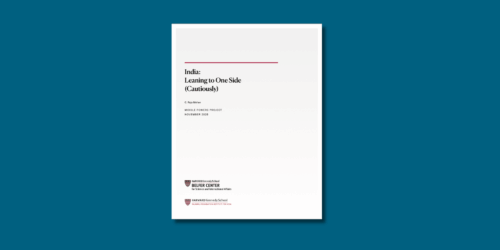
A cover photo of the report.

Case Study

India: Leaning to One Side (Cautiously)

In a new study for the Middle Powers Project, C. Raja Mohan assesses how India’s national ascent towards global influence faces developmental constraints, maintaining that the country must balance ties with China and the United States to harness its economic potential and situate itself as a leader in the Global South. The Middle Powers Project is in collaboration with the Belfer Center for Science and International Affairs. 

Understanding China’s Political Governance
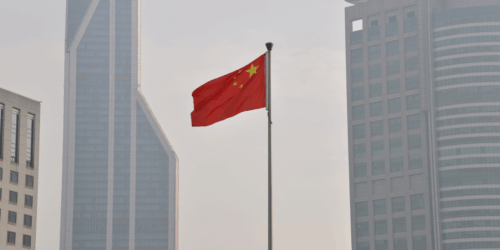
The Chinese flag in front of skyscrapers.

Video

Understanding China’s Political Governance

Tony Saich, Director of the Rajawali Foundation Institute for Asia, gives an expert interview for the Fairbank Center for Chinese Studies at Harvard University on understanding China’s political governance.