Research and Resources

Through our books, case studies, journal articles, papers, and surveys, the Rajawali Foundation Institute for Asia is home to some of Harvard’s most advanced research and publications on issues related to the region.

To explore additional Asia-related research from Kennedy School faculty, please visit the Harvard Kennedy School website.

A cover photo of the report.

Case Study

Risk, Leverage, Autonomy: Turkey’s Options in a U.S.–China World

In a new study for the Middle Powers Project, Senem Aydin-Düzgit explores how Turkey’s position as a strategically autonomous power enables the country to balance ties with the Western and non-Western world, while economic vulnerabilities present challenges for Turkey’s pursuit of its foreign policy goals. The Middle Powers Project is in collaboration with the Belfer Center for Science and International Affairs. 

Read The Story

Filter by

  • Issue Areas
  • Programs
  • Format

Filters

Close

Filters

Issue Areas
Programs
Format

96 Items

of 11

Newest

Risk, Leverage, Autonomy: Turkey’s Options in a U.S.–China World
A cover photo of the report.

Case Study

Risk, Leverage, Autonomy: Turkey’s Options in a U.S.–China World

In a new study for the Middle Powers Project, Senem Aydin-Düzgit explores how Turkey’s position as a strategically autonomous power enables the country to balance ties with the Western and non-Western world, while economic vulnerabilities present challenges for Turkey’s pursuit of its foreign policy goals. The Middle Powers Project is in collaboration with the Belfer Center for Science and International Affairs. 

Striving to Excel? The Rise of South Africa as an Ambitious Global South Agenda Setter
A cover photo of the report.

Case Study

Striving to Excel? The Rise of South Africa as an Ambitious Global South Agenda Setter

In a new study for the Middle Powers Project, Anthoni van Nieuwkerk examines how South Africa’s identity as a key middle power shapes the priorities of the Global South, yet the country’s foreign policy of active nonalignment inhibits its ability to fully embody a leadership role. The Middle Powers Project is in collaboration with the Belfer Center for Science and International Affairs. 

Active Alignment: How Indonesia Can Shape the U.S.-China Strategic Competition
A cover photo of the report.

Case Study

Active Alignment: How Indonesia Can Shape the U.S.-China Strategic Competition

In a new study for the Middle Powers Project, M. Chatib Basri and Evan A. Laksmana explore how “active alignment” can help Indonesia shape strategic competition between the United States and China, facilitating cooperation between the major powers to support Indonesia’s own strategic priorities. The Middle Powers Project is in collaboration with the Belfer Center for Science and International Affairs. 

India: Leaning to One Side (Cautiously)
A cover photo of the report.

Case Study

India: Leaning to One Side (Cautiously)

In a new study for the Middle Powers Project, C. Raja Mohan assesses how India’s national ascent towards global influence faces developmental constraints, maintaining that the country must balance ties with China and the United States to harness its economic potential and situate itself as a leader in the Global South. The Middle Powers Project is in collaboration with the Belfer Center for Science and International Affairs. 

Multi-Alignment as Strategy: How Brazil Navigates Between Washington, Beijing, and the Global South
A cover photo of the report.

Case Study

Multi-Alignment as Strategy: How Brazil Navigates Between Washington, Beijing, and the Global South

In a new study for the Middle Powers Project, Oliver Stuenkel explains how Brazil’s self-perception as a “giant by nature” advances its foreign policy with a strategy of multi‑alignment. As Brazil strives to balance relationships with both China and the United States and solidify its roles in BRICS and the G20, the country’s autonomy is pressured by great-power rivalry and its regional influence remains limited. The Middle Powers Project is in collaboration with the Belfer Center for Science and International Affairs. 

Navigating Priorities – The U.S., Taiwan, and Implications for the Indo-Pacific
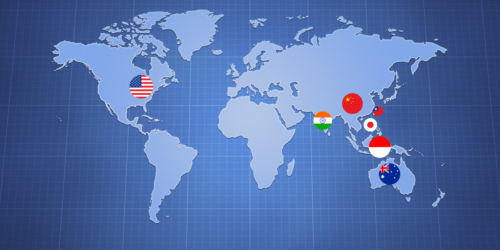
a blue world map with several circular country flags hovering over various countries

Video

Navigating Priorities – The U.S., Taiwan, and Implications for the Indo-Pacific

As a new administration takes shape in Washington, join us for a timely discussion exploring the complex dynamics shaping the Indo-Pacific region. We will examine critical questions facing U.S.-Taiwan relations, regional security architecture, and economic partnerships across the Indo-Pacific. The discussion addressed key policy challenges including defense cooperation, trade relationships, and technological partnerships.

Macroeconomic Management in Bangladesh: Challenges and Opportunities
Cover photo of the report

Policy Brief

Macroeconomic Management in Bangladesh: Challenges and Opportunities

This policy brief explores the macroeconomic challenges posed by the politcal upheaval of July-August 2025 and explains that with serious and sustained reform, the country can overcome these hurdles and pursue inclusive growth and development.

Powering Bangladesh’s Future: Risks and Opportunities in Solar Energy Deployment
Cover photo of the report

Occasional Paper

Powering Bangladesh’s Future: Risks and Opportunities in Solar Energy Deployment

This policy paper aims to provide an analysis of the current state of the solar power industry in Bangladesh, identifying the gaps and risks associated with the implementation of the government’s renewable energy goals.