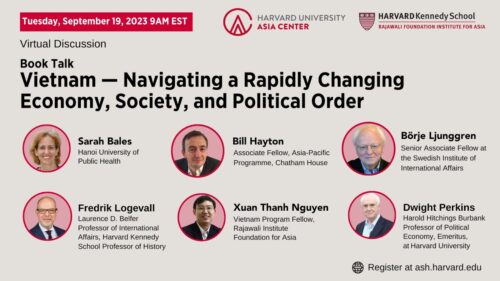
In the late 1980s, most of the world still associated Vietnam with resistance and war, hardship, refugees, and a mismanaged planned economy. During the 1990s, by contrast, major countries began to see Vietnam as both a potential partner and a strategically significant actor—particularly in the competition between the United States and an emerging China—and international investors began to see Vietnam as a land of opportunity.
Vietnam remains a Leninist party-state ruled by the Communist Party of Vietnam that has reconciled the supposedly irreconcilable: a one-party system and a market-based economy linked to global value chains. For the Party stability is crucial and, recently, increasing economic openness has been combined with growing political control and repression.
This book, undertaken by scholars from Vietnam, North America, and Europe, focuses on how the country’s governance shapes its politics, economy, social development, and relations with the outside world, as well as on the reforms required if Vietnam is to become a sustainable and modern high-income nation in the coming decades.
Despite the challenges, including systemic ones, the authors remain optimistic about Vietnam’s future, noting the evident vitality of a determined society.
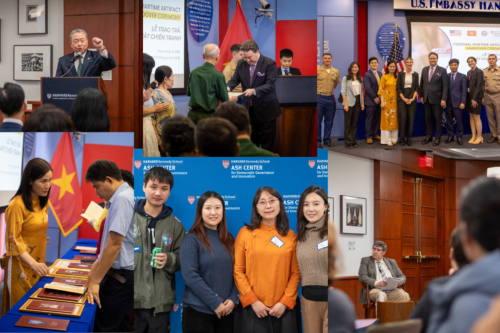
This past semester, the Rajawali Foundation Institute for Asia engaged in conversations and research on topics ranging from Indonesia’s election to US-Taiwan relations with the goal of continuing to develop policy solutions to the region’s most pressing concerns.
Fifty Years On: New Perspectives on the Vietnam Wars – Day Two
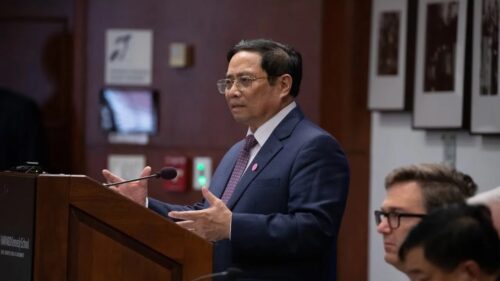
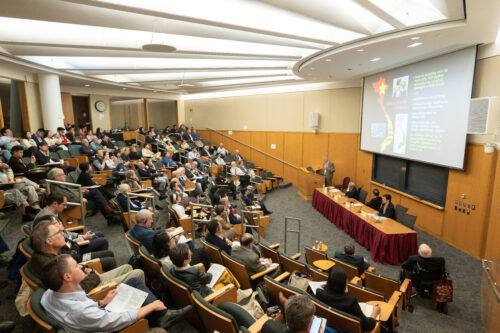
The second day of Fifty Years On: New Perspectives on the Vietnam Wars continued the conversations from Day One, exploring the wars’ lasting global and human impact. Building on the first day’s scholarship and personal reflections, Day Two featured three panels and a final roundtable. A first article covers Day One.
Fifty Years On: New Perspectives on the Vietnam Wars – Day One
The first day of the Fifty Years On: New Perspectives on the Vietnam Wars conference presented new scholarship and firsthand reflections that expanded how the Vietnam Wars are remembered and studied. Scholars, veterans, and practitioners examined the conflict from multiple perspectives, centering Vietnamese and other international voices often missing from traditional narratives. A second article covers Day Two.
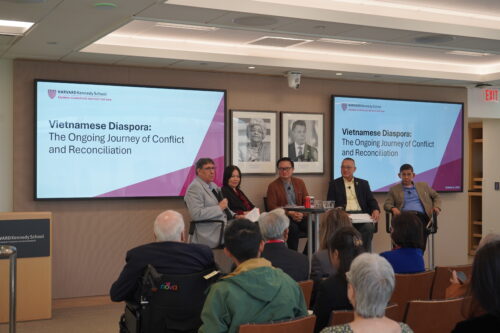
Vietnamese Diaspora: The Ongoing Journey of Conflict and Reconciliation
Fifty years after the fall of Saigon, the panel “Vietnamese Diaspora: The Ongoing Journey of Conflict and Reconciliation,” highlighted personal and intergenerational experiences of loss, resilience, and renewal, offering insight into how the Vietnam Wars continue to shape Vietnamese communities today.