Values and Vision: Perspectives on Philanthropy in 21st Century China
Values and Vision: Perspectives on Philanthropy in 21st Century China is an exploratory study of philanthropic giving among China’s very wealthy citizens.
Recognizing the increasing number of successful entrepreneurs engaged in philanthropic activity in China, this study explores the economic and policy contexts in which this philanthropy is evolving; the philanthropic motivations, aspirations and priorities of some of the country’s most engaged philanthropists; and the challenges and opportunities for increasing philanthropic engagement and impact in China.
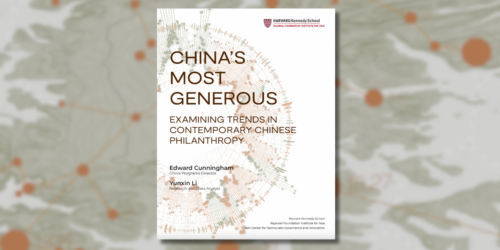
Harvard Kennedy School Releases: China’s Most Generous Report
The Rajawali Foundation at Harvard Kennedy School released, “China’s Most Generous – Examining Trends in Contemporary Chinese Philanthropy”, which provides insights into current trends among China’s major donors and recipients.
China’s Most Generous: Examining Trends in Contemporary Chinese Philanthropy
This report on elite philanthropy presents the latest findings from the Harvard Kennedy School Rajawali Foundation Institute’s China Philanthropy Project and provides insight into current trends among China’s major donors and recipients.
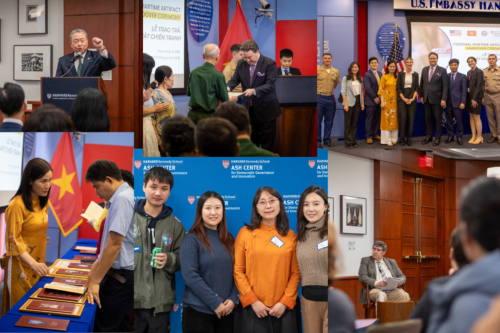
This past semester, the Rajawali Foundation Institute for Asia engaged in conversations and research on topics ranging from Indonesia’s election to US-Taiwan relations with the goal of continuing to develop policy solutions to the region’s most pressing concerns.
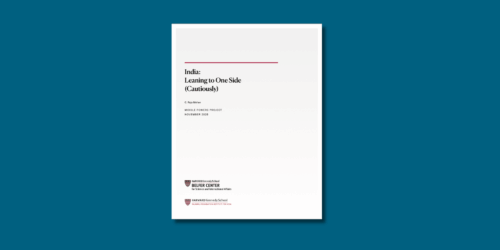
In a new study for the Middle Powers Project, C. Raja Mohan assesses how India’s national ascent towards global influence faces developmental constraints, maintaining that the country must balance ties with China and the United States to harness its economic potential and situate itself as a leader in the Global South. The Middle Powers Project is in collaboration with the Belfer Center for Science and International Affairs.
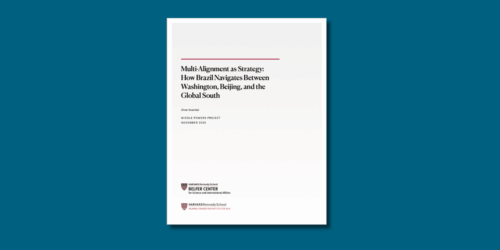
Multi-Alignment as Strategy: How Brazil Navigates Between Washington, Beijing, and the Global South
In a new study for the Middle Powers Project, Oliver Stuenkel explains how Brazil’s self-perception as a “giant by nature” advances its foreign policy with a strategy of multi‑alignment. As Brazil strives to balance relationships with both China and the United States and solidify its roles in BRICS and the G20, the country’s autonomy is pressured by great-power rivalry and its regional influence remains limited. The Middle Powers Project is in collaboration with the Belfer Center for Science and International Affairs.
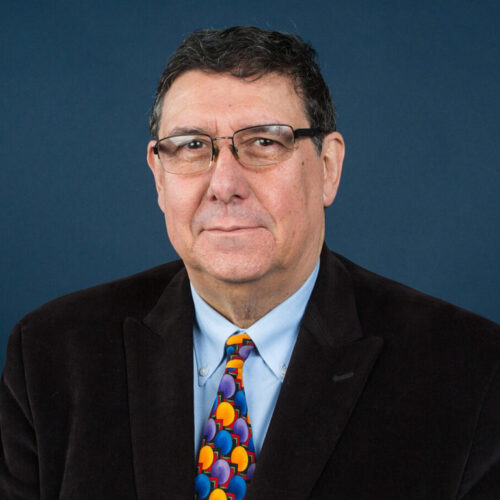
Tony Saich, Director of the Rajawali Foundation Institute for Asia, gives an expert interview for the Fairbank Center for Chinese Studies at Harvard University on understanding China’s political governance.